
There is a moment in almost every family history journey where you come across something… unexpected.
A box. A drawer. A tin.
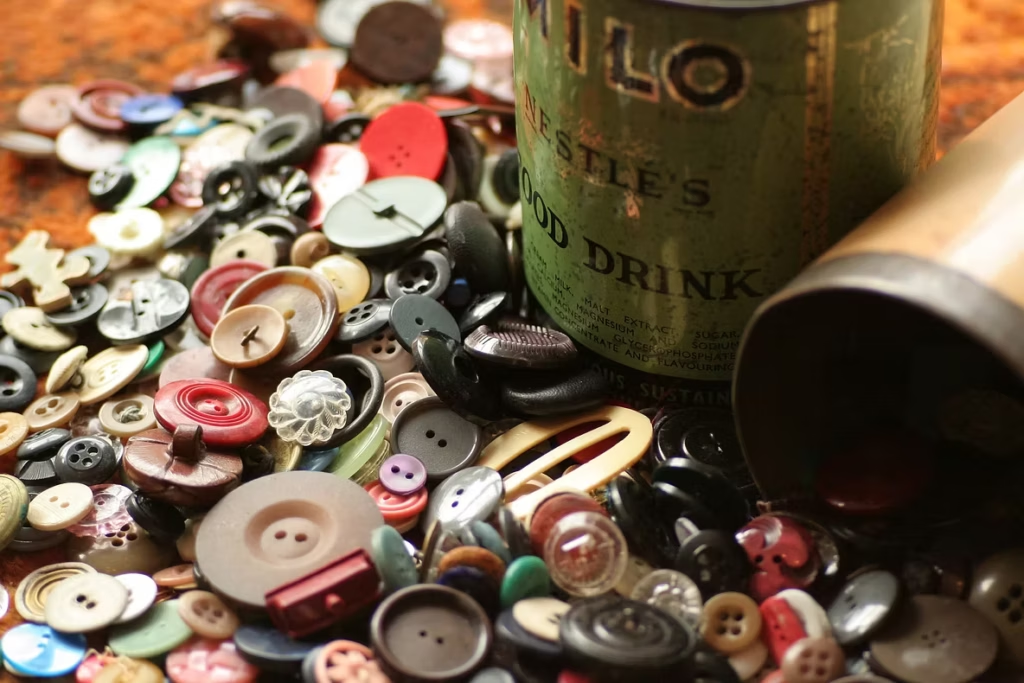
Filled with buttons.
Not attached to anything.
Not organized in any logical way.
Just… there.
And at first, you might think:
Why did they keep all of these?
But then you pause.
Because the more you learn about how your ancestors lived, the more that little tin starts to make sense.
Because those buttons?
They weren’t clutter.
They were a system.
The Button Tin Was Not Optional
In many households—especially in the late 1800s and early 1900s—nothing was wasted.
Clothing wasn’t disposable. Fabric wasn’t easily replaced.
And buttons? Buttons were valuable.
So when a shirt wore out… The buttons came off.
When a coat was no longer usable… The buttons were saved.
When anything reached the end of its life… The usable parts were kept.
Which meant over time, families accumulated:
- jars
- tins
- boxes
full of buttons from clothing that no longer existed.
And that collection?
That was generally the button tin.

Repair Was Part of Daily Life
Today, if a button falls off, there’s a good chance one of three things happens:
- it sits in a drawer indefinitely
- it gets “fixed later”
- or the item quietly stops being worn
In the past?
That wasn’t an option.
Clothing was repaired. Regularly.
Which meant:
- buttons were replaced
- seams were mended
- garments were extended as long as possible
And having a supply of buttons on hand wasn’t just helpful.
It was necessary.
This ties directly into routines like Wash Day Wednesdays: The Most Exhausting Day of the Week, where clothing care was an ongoing, labor-intensive process.
Because if you were already spending that much effort maintaining clothes…
You weren’t about to throw them away over a missing button.
A Little Bit of Everything
If you’ve ever looked through a button tin, you’ve probably noticed:
There’s no consistency.
You’ll find:
- large buttons
- tiny buttons
- decorative buttons
- plain buttons
- mismatched sets
- duplicates (rare, but exciting)
- and at least one button that makes you think:
What was this even from?
And that’s part of what makes them interesting.
Because each button came from something:
- a dress
- a coat
- a child’s shirt
- a work uniform
- a piece of clothing worn for years
Even if the original item is long gone, the button remains.
The Hope of Finding “The Match”
There’s also a very specific kind of optimism built into a button tin.
Because every time someone needed a replacement, they would:
- open the tin
- sort through it
- look for a match
And sometimes?
They found one.
Other times?
They found something close enough.
Which meant garments occasionally ended up with:
- slightly mismatched buttons
- creatively substituted closures
- a “good enough” solution
That’s resourcefulness.

Why Saving Everything Made Sense
It’s easy to look back and think:
That seems excessive.
But in context, it really wasn’t.
Because saving small items like buttons meant:
- fewer purchases
- less waste
- more independence
- greater flexibility in repairs
And in many households, especially during times of economic hardship, that mattered. A lot.
This same mindset shows up in other parts of daily life:
- preserving food (Iceboxes, Ice Men, and the Battle Against Spoiled Milk)
- reusing materials
- repairing instead of replacing
It wasn’t about nostalgia.
It was about practicality.
What Genealogists Can Learn from a Button Tin
A button tin might not look like a historical record.
But it tells a story.
It reflects:
- economic conditions
- household habits
- attitudes toward waste and reuse
- daily routines
- personal resourcefulness
And while you may not be able to trace a specific button back to a specific garment…
You can understand the environment it came from.
A household where:
- things were kept
- things were repaired
- things were valued
Which adds context to everything else you find.
If you’re exploring everyday life through objects like this, you might also enjoy [#68 Family History Recipe Cards or Old Timey Recipes], where small, personal items tell much bigger stories.
Somewhere Between Practical and Personal
What I find most interesting about button tins is how they sit between two ideas:
They’re practical.
And they’re personal.
Because while they were created out of necessity…
They often became something more.
A collection. A habit.
Something passed down.
Something kept even after it was no longer strictly needed.
And at some point, the reason shifted from:
“We might need these”
to:
“We’ve always kept these”
Final Thoughts
The button tin may seem small.
Insignificant.
Easy to overlook.
But it represents something important:
A way of life where:
- things were saved
- things were repaired
- things were used fully
And where even the smallest objects had value.
Not necessarily because they were special.
But because they were useful.
There’s something kind of grounding about that.
Even if we don’t keep tins of buttons quite the same way anymore.
🔗 Related Rabbit Holes
- [#84 Wash Day Wednesdays: The Most Exhausting Day of the Week]
- [#86 Iceboxes, Ice Men, and the Battle Against Spoiled Milk]
- [#68 Family History Recipe Cards or Old Timey Recipes]
- [#96 The Quilting Bee: Gossip, Art, and Community Wrapped in One Blanket]
📚 Sources & Further Reading
- Vintage Buttons in Old Tin Box
- Vintage Buttons – What you Need to Know
- May 1957 – Sewing and Repairs Clothing repairs were common
- Smithsonian Institution — domestic life and material culture
- Library of Congress — everyday household practices
- Historical accounts of domestic life and clothing repair practices